

Retailers create choice overload when every paddle is described with the same broad claims about power, control, and spin. A practical filter based on player level, court conditions, physical fit, construction, price, and tournament status lets you recommend Reponse models with fewer returns and clearer customer expectations.
Key takeaways
- Ask four player-type questions before showing paddle models.
- Compare published weight, balance, grip, and surface specifications.
- Set return checks and inspect stock before displaying pickleball equipment.
- Verify current tournament rules instead of promising paddle approval.
Use a Four-Branch Decision Tree Before Showing Paddle Models
Ask four questions before showing pickleball paddles: Is the buyer a beginner, recreational player, competitive player, or tournament entrant?
| Buyer type | Shortlist first | Follow-up |
|---|---|---|
| Beginner | Manageable weight, comfortable grip circumference, balanced handling, forgiving shape | Avoid maximum power as the main selling point |
| Recreational player | Manoeuvrability, comfort, and budget | Choose casual doubles, fitness sessions, or mixed indoor and outdoor play |
| Competitive player | Swing weight, balance point, face texture, core thickness, and handle length | Establish the preferred control-power trade-off |
| Tournament entrant | Dimensions, surface rules, and the current USA Pickleball approved paddle list | Verify eligibility before discussing performance claims |
Then ask what the player wants most: faster hand exchanges at the net, greater stability on drives, extra reach, or a softer feel on resets. Keep three choices visible:
- A safer all-round option for the broadest fit.
- A specialised option for a clear need, such as reach or quick handling.
- A higher- or lower-cost comparison that exposes the trade-off.
Do not describe “spin,” “control,” or “power” as standard grades; they are not. Compare the actual specification sheet and the player’s use case instead. A tournament-approved paddle can still have the wrong grip or balance, while a face-material label alone cannot predict feel.
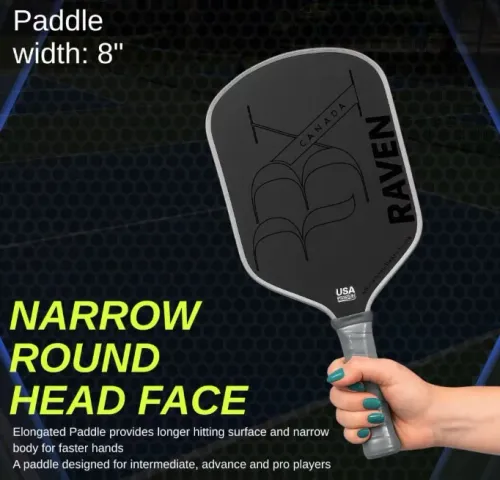
Compare Reponse, VELOZ, RAVEN, and RBX INFERNO by Published Specifications
Use the supplier’s exact model and version, not the product-family name, as the comparison key. Record every measurement in the same units and method; an unmodified weight range must state whether it excludes overgrip, edge tape, and lead tape.
| Field | Reponse | VELOZ | RAVEN | RBX INFERNO |
|---|---|---|---|---|
| Weight (g) | Not published; confirm before stocking. Record unmodified range and exclusions. | Not published; confirm before stocking. | Not published; confirm before stocking. | Not published; confirm before stocking. |
| Length and width (mm) | Confirm before stocking | Confirm before stocking | Confirm before stocking | Confirm before stocking |
| Grip circumference (mm) | Confirm before stocking | Confirm before stocking | Confirm before stocking | Confirm before stocking |
| Handle length (mm) | Confirm before stocking | Confirm before stocking | Confirm before stocking | Confirm before stocking |
| Core material and thickness (mm) | Confirm before stocking | Confirm before stocking | Confirm before stocking | Confirm before stocking |
| Face material and surface texture | Confirm before stocking | Confirm before stocking | Confirm before stocking | Confirm before stocking |
| Shape | Confirm before stocking | Confirm before stocking | Confirm before stocking | Confirm before stocking |
| Balance point | Confirm before stocking | Confirm before stocking | Confirm before stocking | Confirm before stocking |
| Edge-guard construction | Confirm before stocking | Confirm before stocking | Confirm before stocking | Confirm before stocking |
| Approval status | Confirm before stocking | Confirm before stocking | Confirm before stocking | Confirm before stocking |
Do not infer feel from polypropylene, carbon fiber, fiberglass, or graphite. Surface finish, core thickness, shape, and mass distribution also affect spin, control, and stability.
Assign profiles only after those fields are verified: lighter or head-light for quick net exchanges, stable or head-heavier for drives and blocks, longer for reach, and wider for contact area. This keeps recommendations for Reponse pickleball paddles for retailers in Delhi defensible across all pickleball paddles.
Match Weight, Balance, Grip, and Court Conditions to the Player
Recommend the paddle by finished weight and balance, not the number printed on the specification sheet; two pickleball paddles with identical total weights can feel entirely different when one carries more mass in the head.
Ask these seven questions before showing pickleball equipment:
- What is your playing level?
- Do you play indoors or outdoors?
- Do you favour resets and dinks, fast drives, serves, or two-handed backhands?
- Do you have elbow, wrist, or shoulder concerns?
- Do you need extra reach?
- What is your budget?
- Do you value control, power, manoeuvrability, or spin?
Use the answers this way:
| Choice | On-court effect | Best fit |
|---|---|---|
| Heavier or head-heavy | More momentum and stability; slower reactions and greater fatigue | Strong player with a controlled swing |
| Lighter or head-light | Faster net repositioning; less stability against hard shots | Slower swing speed or lower fatigue tolerance |
| Longer handle | Supports a two-handed backhand and changes balance | Players needing reach or two-handed control |
| Oversized grip | Restricts hand adjustments | Avoid when quick grip changes matter |
Record grip circumference in millimetres and handle length; “standard grip” hides useful differences. Outdoor balls are firmer, more wind-resistant, and harder on surfaces, while indoor balls are softer with larger holes.
For Delhi play, expect dust, heat, direct sun, and monsoon moisture to affect wear and ball consistency: use shade, dry storage, and replace visibly damaged balls. Judge the paddle after a full session, not a few swings.
Control Cost, Returns, and Stock Quality Before You Display Reponse
A lower invoice price is better value only when it also reduces replacement, warranty, demo, freight, inspection, and lost-customer costs. Use one worksheet for every model, then compare the estimated cost per sale rather than the purchase price alone.
| Model | Purchase price | After-sale cost to include | Stock decision |
|---|---|---|---|
| Reponse | Supplier quote | Replacements, warranty handling, demo time, return freight, inspection labour, lost customer | Confirm specifications |
| VELOZ | Supplier quote | Same calculation | Confirm specifications |
| RAVEN | Supplier quote | Same calculation | Confirm specifications |
| RBX INFERNO | Supplier quote | Same calculation | Confirm specifications |
Ask the supplier for expected replacement frequency and warranty terms before assigning shelf space. Unclear specifications can create poor matches, repeated returns, and dissatisfied customers who choose another supplier.
Before display or dispatch, inspect each item as pickleball equipment:
- Check the grip for peeling, compression, contamination, and uneven finishing.
- Run a finger around the edge guard; it must sit flush around the perimeter.
- Examine the face for dents, scratches, delamination, bubbles, and exposed fibres.
- Verify the packaging seal and match the printed model name with the invoice and product record.
- Record the batch or lot number, arrival date, and photographs of damaged units.
Keep identical fields and units across the comparison table. For Reponse pickleball paddles for retailers in Delhi, Rbxsports can provide specification sheets, warranty terms, replacement procedures, and batch records; those documents make recommendations and warranty decisions faster.
Related product
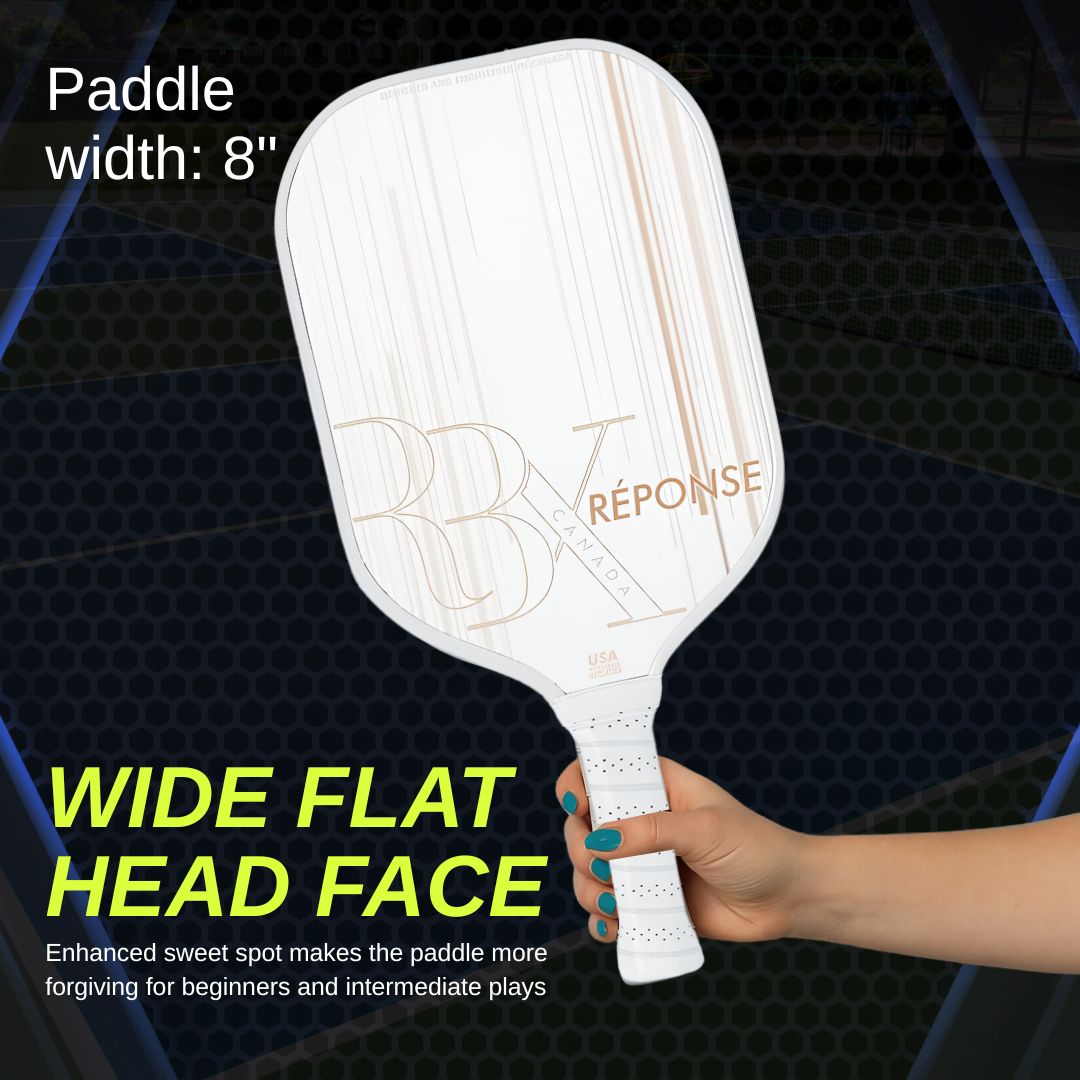 | PICKLEBALL PADDLE REPONSE ₹2550 'Introducing the REPONSE Line of Pickleball Paddles from RBX Pickleball, which represent an ideal combination of performance and cost-effectiveness. |
Verify Tournament Eligibility Instead of Promising Approval
Treat tournament legality as a verification task, not a promise. “Response” is not an official pickleball equipment category or certification, and “maximum spin” is a marketing claim, not evidence that a paddle is legal for sanctioned competition.
For Reponse pickleball paddles for retailers in Delhi, check the current USA Pickleball approved paddle list using the exact model name and version supplied. Then confirm that the customer’s event recognises that list.
- Confirm total paddle length is no more than 17 inches (43.18 cm).
- Confirm combined length and width is no more than 24 inches (60.96 cm).
- Read the published surface description for prohibited features and excessive roughness.
- Treat approval as the result of equipment testing, not a retailer’s interpretation of carbon fibre, fiberglass, graphite, or another face material.
- Save a dated screenshot of the listing or a supplier record showing the model and version checked.
Rules and approval lists can change, so date the record every time you verify a paddle. If a Reponse listing has no confirmed approval entry, label it “approval to verify,” never “tournament legal.”
Approval answers only the compliance question. An approved paddle can still have the wrong grip size, balance, weight, handle length, or power level for the buyer. Separating tournament status from ordinary pickleball equipment recommendations helps prevent a customer arriving at an event with a rejected paddle.
Frequently asked questions
What questions should retailers ask before recommending pickleball paddles?
Ask whether the buyer is a beginner, recreational player, competitive player, or tournament entrant, then ask about playing frequency, preferred control or power, grip comfort, and court conditions.
How should retailers compare Reponse, VELOZ, RAVEN, and RBX INFERNO paddles?
Create a specification chart using each model’s published weight, dimensions, grip size, balance description, face material, core, and stated playing characteristics. Do not fill missing specifications with assumptions.
How do weight, balance, grip, and court conditions affect paddle choice?
Lighter paddles suit players prioritising quick reactions, while heavier paddles add stability and drive weight. Compare handle circumference and balance with the player’s hand size, swing comfort, and indoor or outdoor playing conditions.
What should retailers check before displaying pickleball paddles?
Confirm the invoice and stock count, inspect faces and edge guards for damage, record model and batch details, define return conditions, and separate opened or marked paddles from sellable stock.
Can a retailer promise that a pickleball paddle is approved for tournaments?
No. Check the current approval list and rules of the governing body or event before making that claim. Product descriptions alone do not establish tournament eligibility.