

A Kevlar face alone cannot tell you whether a paddle will suit three hours of drills, and “Reponse” is not specific enough without the exact model and construction. By the end, you will have a controlled test method, drill-by-drill selection rules, and a purchase checklist for comparing the two options in Delhi.
Key takeaways
- Compare core, face, thickness, weight, balance, and handle—not the Kevlar label.
- Use touch paddles for resets and control paddles for fast volley drills.
- Record speed, comfort, durability, and mishits during a fair club trial.
- Confirm delivered Delhi cost, warranty terms, stock, and replacement availability.
Start with construction, not the word Kevlar
Verify the construction before comparing performance. “Kevlar” is not a regulated paddle category: it can mean a Kevlar/aramid face layer, reinforcement within the layup, or composite marketing language. Core material, face texture, resin system, thickness, weight, balance, and handle dimensions will shape the result more than the label.
1. Record the exact model name and number for both options. A reponse pickleball paddle name alone is not enough; confirm its face material, core type, thickness, measured weight, grip length, and grip circumference.
2. Ask for the manufacturer’s surface-texture specification and check the exact model on the current USA Pickleball approved list if your club follows those rules. Grit can wear down, so note whether each paddle is new or used.
3. Hold the ball constant. Outdoor balls are harder with smaller holes; indoor balls are softer with larger holes, changing speed, bounce, noise, and perceived power.
4. Inspect any used paddle for edge-guard damage, bubbles, soft spots, face separation, and altered sound or vibration. A Kevlar face does not prevent delamination, core crushing, or damage from off-centre hits and paddle clashes.
| Verify | Kevlar paddle listing | Reponse paddle listing |
|---|---|---|
| Face and core | Aramid layer and polymer or foam core identified | Exact face and core materials identified |
| Dimensions | Thickness, weight, balance, handle, grip recorded | Same measurements recorded |
| Playing surface | Texture specification and approval checked | Texture specification and approval checked |
| Club suitability | Approved model and condition confirmed | Approved model and condition confirmed |
Match paddle characteristics to each club drill
A dink needs touch and a predictable soft rebound; an overhead needs stability and enough mass to resist twisting. For pickleball paddles for clubs, match the paddle to the drill rather than choosing by the Kevlar or Reponse label alone.
| Drill | Traits that matter most | What to compare |
|---|---|---|
| Dinks | Soft-touch control, low vibration, consistent face response | Face texture, core thickness, sweet-spot behavior, and rebound on slow contact |
| Third-shot drops | Touch, stability, moderate swing weight | How easily the paddle produces a controlled arc without excessive launch |
| Resets | Forgiveness, stability, vibration comfort | Twist resistance and off-centre response during defensive blocks |
| Drives | Swing speed, spin access, controlled power | Measured weight, balance point, swing weight, and surface grip |
| Volleys | Quick handling, compact balance, firm stability | Handle length, grip circumference, and recovery speed after contact |
| Overheads | Stability, power, and torsional resistance | Weight distribution, edge durability, and comfort during repeated swings |
| Serve returns | Reach, forgiveness, directional control | Sweet-spot size, handle length, and rebound consistency on deep contact |
A Kevlar face can change firmness, vibration, and spin response, but the core, thickness, resin, texture, and balance still control the result. Two Kevlar paddles can feel less alike than a Kevlar and Reponse paddle.
For a club set, closely match weight, grip size, balance, and face response. Label each paddle with measured weight when matching is impossible, then record mishits, soft-shot control, fatigue, vibration, power, and spin after a full drill sequence—not just a warm-up.
Balance durability, touch, speed, and arm comfort
A high-volume club player should choose the paddle that reduces fatigue over repeated drills, not the one with the more impressive face material. Kevlar pickleball paddles can deliver a firm, stable response and strong wear resistance, but the core, thickness, weight, balance, and grip determine whether that construction feels quick or tiring.
| Priority | Kevlar paddle | Reponse paddle |
|---|---|---|
| Durability | A sensible option for shared sessions and frequent mishits when its face and resin are well built | Verify the exact model’s face and core before assuming equal service life |
| Touch | A firm layup can feel crisp on blocks and volleys, but may give less dwell time for delicate dinks | Choose it if its softer or thinner construction gives you clearer feedback on drops and resets |
| Speed | A lighter, head-balanced model can accelerate quickly; a heavier one can drive harder but slow hand changes | Compare measured weight and swing feel, not the Reponse name alone |
| Arm comfort | Firm vibration or excessive swing weight can aggravate an already sensitive elbow or shoulder | Prefer it when the handle, balance, and vibration feel calmer during extended play |
Use your playing profile to settle close calls:
- Beginners should prioritise a forgiving sweet spot, secure grip, and low fatigue over maximum power.
- Advanced players who attack with drives and overheads can accept a firmer feel if it improves stability and does not slow exchanges.
- Players focused on dinks, drops, and resets should select the paddle that provides predictable touch at low speed.
- For daily training, compare both paddles after repeated overheads and mishits; record arm soreness, vibration, and grip pressure rather than judging after five minutes.
- Measure handle circumference and length. An undersized grip encourages squeezing, while an oversized grip slows wrist and hand changes.
Run a fair Kevlar-versus-Reponse club trial
A fair trial changes only the paddle. Use the same approved ball, court, net, temperature, drill order, and players for both options. Outdoor and indoor balls alter speed, bounce, noise, and perceived power, so switching ball type can invalidate the result.
- Label each paddle with its model, measured weight, grip circumference, and handle length. Record the exact reponse pickleball paddle model, not just “Reponse.”
- Give every player the same five-minute warm-up, then run serves, third-shot drops, resets, blocks, volleys, and repeated overheads.
- Use a crossover: half the players start with Kevlar, while the rest start with the Reponse; switch after the first round. Repeat the session on another day.
- Keep shoes, balls, court position, feeding method, and rest periods consistent. A short hit can hide fatigue and consistency differences.
- Score mishits, target accuracy, soft-shot control, power, spin, fatigue, grip comfort, and perceived vibration separately. Do not let a player’s preference become the performance result.
| Trial measure | Kevlar paddle | Reponse paddle |
|---|---|---|
| Ball and court | Same approved ball, court, net, and temperature | Same approved ball, court, net, and temperature |
| Player exposure | Same players and equal repetitions | Same players and equal repetitions |
| Drills | Serves, drops, resets, blocks, volleys, overheads | Serves, drops, resets, blocks, volleys, overheads |
| Record | Mishits, control, power, spin, fatigue, comfort, vibration | Mishits, control, power, spin, fatigue, comfort, vibration |
Check the delivered cost and replacement path in Delhi
A cheaper catalogue price can become the costlier club paddle after GST, shipping, currency conversion, import fees, and a long warranty shipment. Compare the delivered invoice and replacement route for both options before choosing pickleball paddles in delhi.
| Option | Check before purchase | Why it changes club cost |
|---|---|---|
| Kevlar candidate | Delivered price, measured weight, grip size, face specification, and local stock | A technically attractive imported paddle loses value if one replacement requires international shipping |
| Reponse candidate | Exact model number, face and core materials, thickness, balance, swing weight, handle length, and circumference | “Reponse” is not enough to identify how it will feel or whether it suits repeated training |
| Either model | Warranty exclusions for face wear, accidental impact, and unauthorised modifications | A damaged face or altered handle may leave you paying for replacement |
| Either model | Replacement lead time and written return procedure | A club loses usable training time while waiting for an individual shipment |
| Either model | Current USA Pickleball approval status | Check this when your club follows USA Pickleball equipment rules |
Ask Rbxsports for the exact Reponse specification sheet and the replacement process, not just the selling price. Use kevlar pickleball paddles reponse for comparison in delhi as a search starting point, then verify the actual model.
Before ordering, check the surface specification and approval status because grit wears down. Store either paddle away from Delhi heat, direct sun, damp gear, and hot cars; use a cover and dry it after wet play. Compare grip circumference directly, since “standard” sizes differ. A clear local replacement path can outweigh a small performance advantage.
Related products
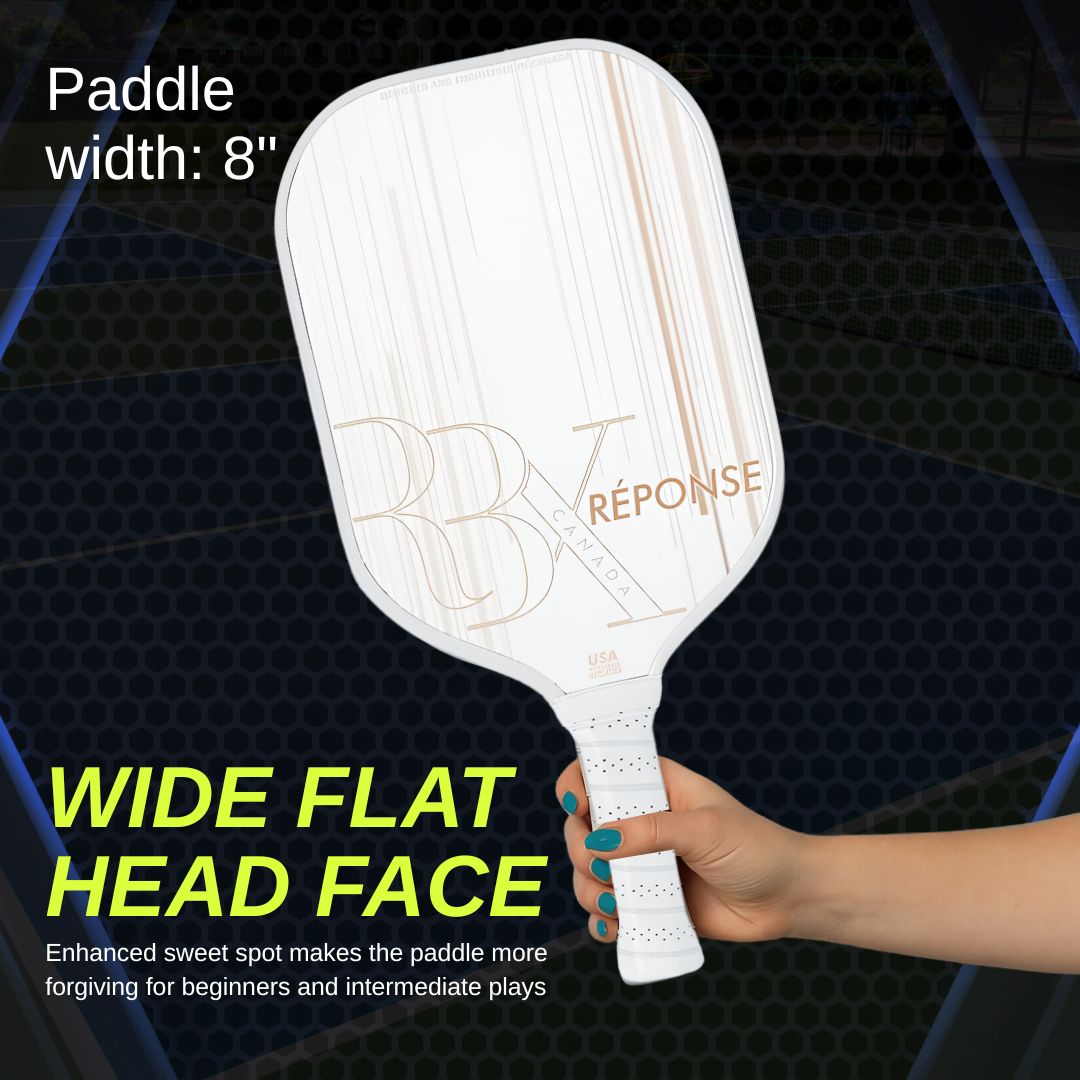 | PICKLEBALL PADDLE REPONSE ₹2550 'Introducing the REPONSE Line of Pickleball Paddles from RBX Pickleball, which represent an ideal combination of performance and cost-effectiveness. |
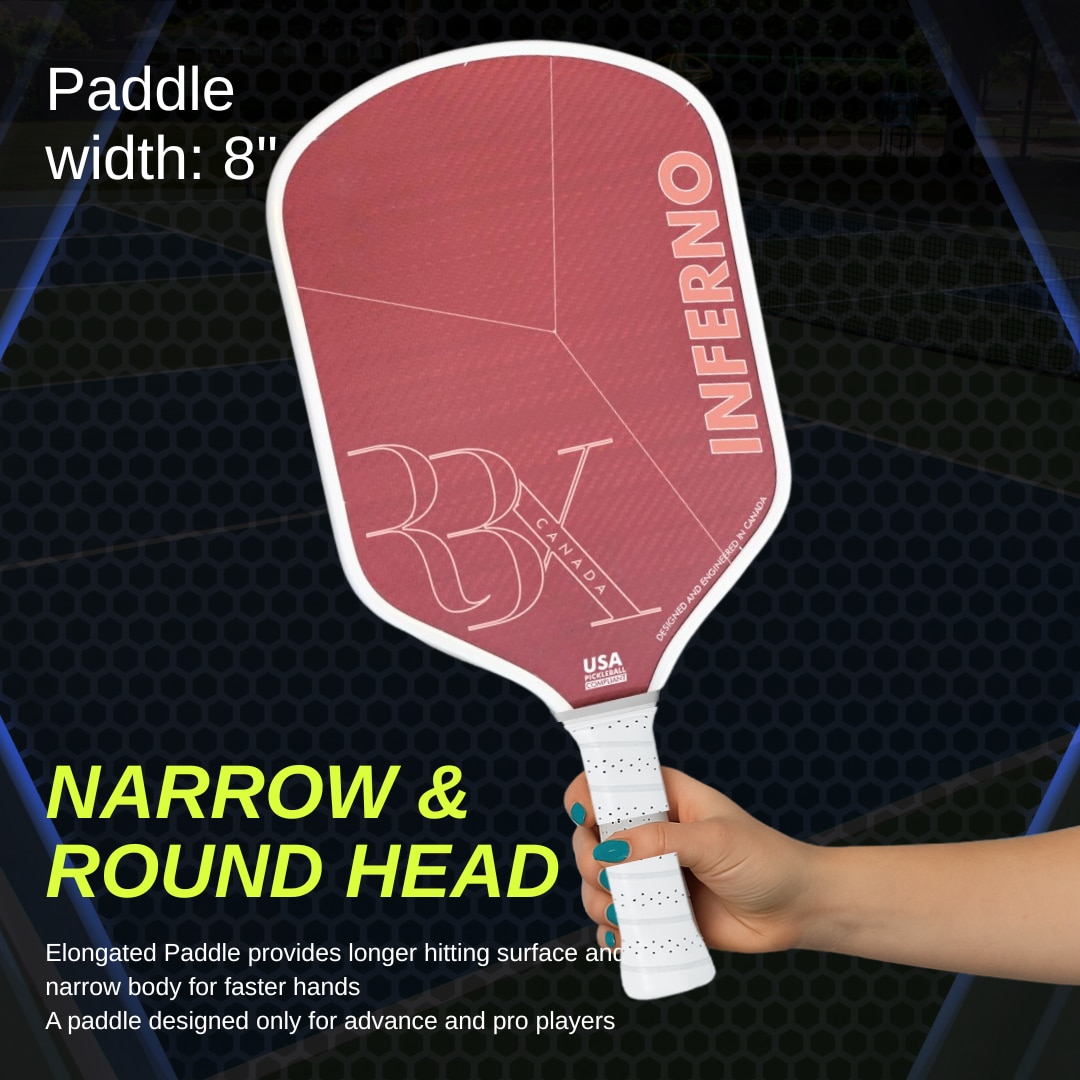 | PICKLEBALL PADDLE ₹15300 Innovative Technology ~ The RBX Inferno Paddle, with its 100% KEVLAR face, ushers in a new era of pickleball. View product → |
Frequently asked questions
What should you compare before choosing Kevlar pickleball paddles?
Compare the core material, face texture, resin system, thickness, weight, balance point, handle dimensions, and the actual role of any Kevlar or aramid layer.
Which paddle characteristics suit different club training drills?
Touch and control suit resets, dinks, and third-shot drops; quicker, lighter handling suits hand battles, volleys, and reaction drills; stable paddles suit drives and blocking.
How can a club run a fair Kevlar-versus-Reponse paddle trial?
Give players equal time with each paddle, use the same balls and drills, and record depth, errors, speed, comfort, and visible wear.
What should Delhi clubs check before ordering pickleball paddles?
Check the delivered price, GST and shipping charges, stock location, warranty process, batch or model details, return terms, and the route for replacement units.