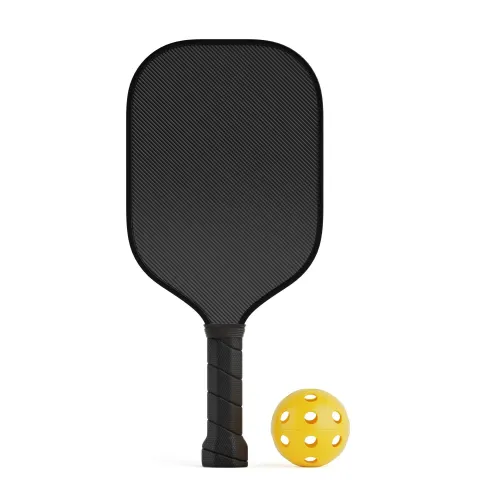


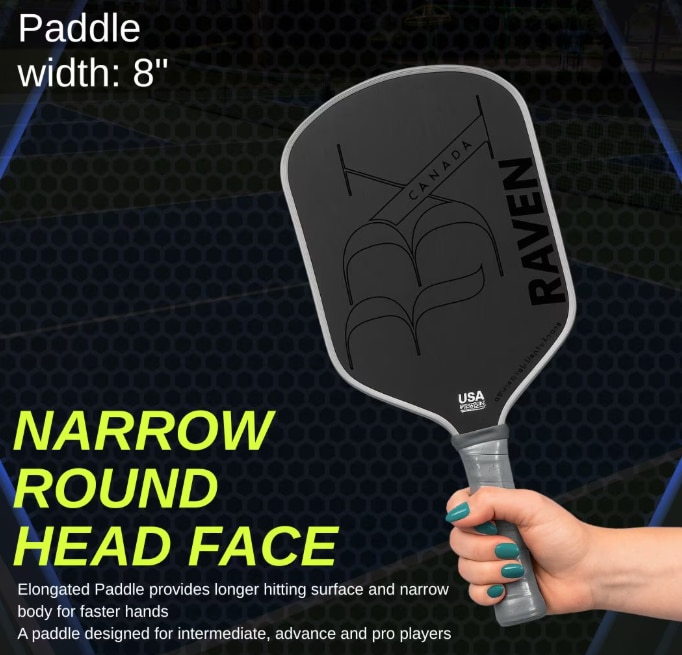
The name “Raven” does not identify a pickleball ball by itself: the available RAVEN product description refers to a paddle, while GRX-40 is identified as an outdoor ball. By checking the exact model, measurable specifications, Delhi playing conditions, and cost per playable ball, you can separate a genuine comparison from packaging language and choose the right ball for practice, clubs, or regulated competition.
Key takeaways
- Verify the Raven model code, package photo, and indoor or outdoor classification.
- Compare ball construction with Delhi’s heat, dust, wind, and hard court surfaces.
- Test competing balls under identical court, weather, and playing conditions.
- Choose balls by use: recreation, coaching, clubs, or tournament competition.
Confirm What “Raven” Means Before Comparing Balls
The available Raven product copy identifies a paddle, not a pickleball ball. A Raven pickleball ball is therefore not established by the name alone. Before a raven for pickleball balls comparison in delhi, ask for the package photograph, exact model code, indoor or outdoor classification, and tournament-approval claim.
For Raven pickleball balls in Delhi, compare only a verified ball model with GRX-40 or a named alternative.
Request these details before buying:
- Ball diameter and weight
- 26-hole indoor or 40-hole outdoor design, plus hole pattern and hole size
- Polymer material, colour, surface finish, and seam quality
- Batch or lot number, manufacturing information, and sealed-pack condition
| Ball option | What to verify | Correct comparison |
|---|---|---|
| Raven ball | Exact model code and indoor/outdoor classification; do not rely on “Raven” alone | Compare with GRX-40 only after matching intended use |
| GRX-40 | Whether it is the outdoor 40-hole model, its dimensions, weight, and approval status | Compare against another verified outdoor ball |
| Indoor ball | 26-hole design, softer plastic, and indoor-use label | Do not compare its bounce directly with an outdoor ball |
Hold temperature constant: acclimatize every ball in the same hall or court and record the temperature. Heat changes polymer stiffness and bounce. Reject visibly warped balls, sun-baked packaging, and stock with no traceable batch information.
Compare Construction Against the Conditions on Delhi Courts
A verified Raven ball must be identified by an exact model and ball specification, not the name alone. Rbxsports lists RAVEN as a paddle, so treat any “Raven ball” claim as unverified until the packaging names the manufacturer, indoor or outdoor use, diameter, weight, hole count, hole pattern, material, colour and finish.
| Option | Construction to verify | Delhi-court implication |
|---|---|---|
| Verified Raven ball | Confirm diameter, weight, hole count and pattern, polymer, colour and surface finish on the pack or datasheet | Compare only after matching its intended indoor or outdoor use |
| GRX-40 | Outdoor classification, polyethylene construction and precision-drilled holes are stated; obtain its exact diameter and weight from the seller | A suitable baseline for abrasive outdoor courts, dust and wind |
| Indoor ball | Usually softer, lighter-feeling, with larger holes and lower abrasion resistance | Better control indoors; it can deform or wear quickly on outdoor concrete or asphalt |
| Other outdoor ball | Check hard polymer, hole geometry, roundness and surface finish rather than relying on “outdoor” alone | Harder construction can resist wind and rough courts but feel fast or harsh indoors |
For a useful pickleball balls comparison, acclimatise every ball in the same hall or court and record the temperature. Heat changes polymer stiffness and bounce, so a midday ball versus an air-conditioned ball creates a false brand advantage.
Test identical serves, deep returns and dinks, then mark each ball, measure diameter, and inspect deformation after several sessions.
Reject sealed packs with warped balls, damaged packaging or storage exposure to direct sun and hot vehicles. Ask for batch information; inconsistent batches can matter as much as the advertised design.
Related product
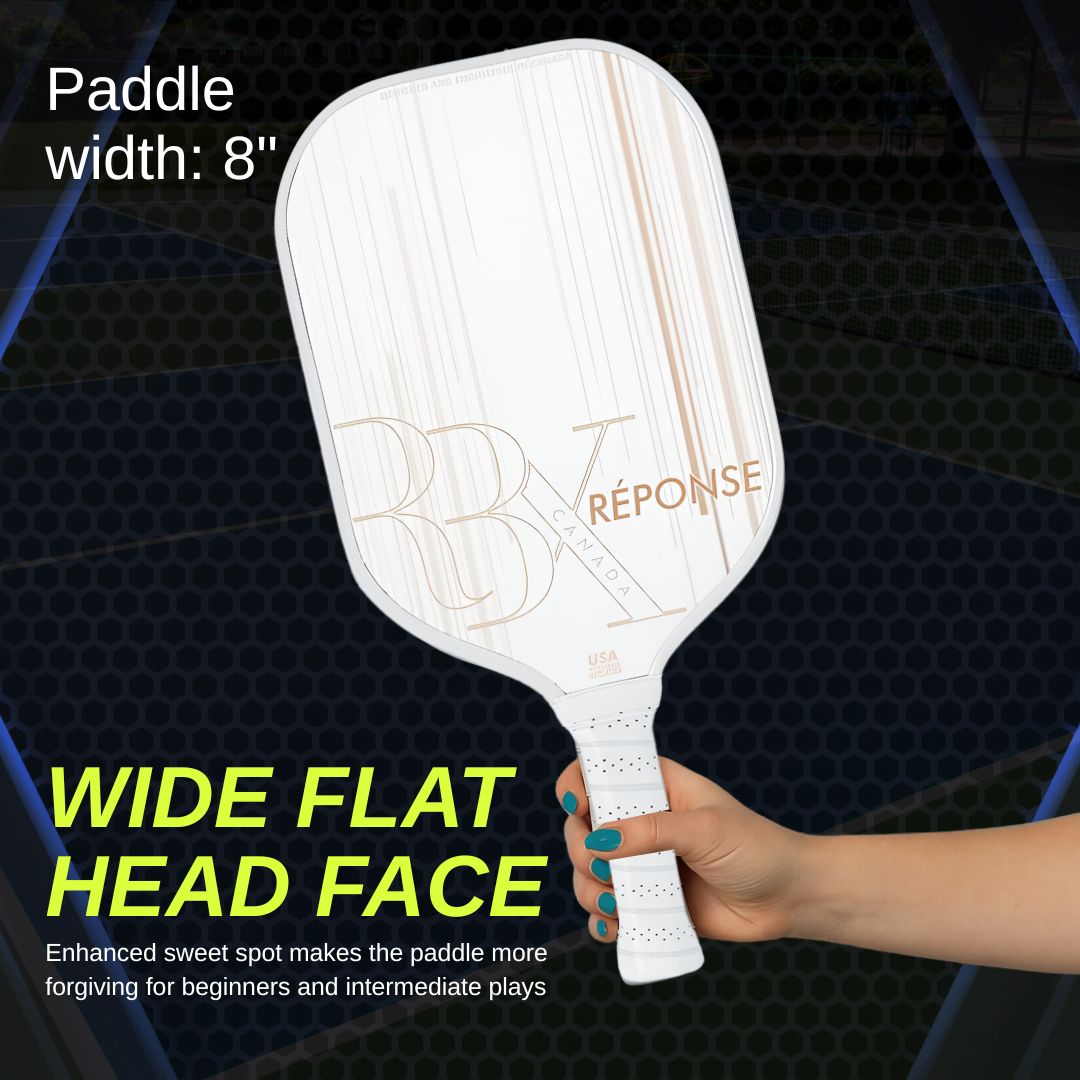 | PICKLEBALL PADDLE REPONSE ₹2550 'Introducing the REPONSE Line of Pickleball Paddles from RBX Pickleball, which represent an ideal combination of performance and cost-effectiveness. |
Use a Controlled Court Test Instead of Judging by Branding
Test every ball on the same court, at the same temperature, and after the same acclimatization period. Delhi heat, dust, and abrasive surfaces can change polymer stiffness and damage balls, so comparing one ball at midday with another from an air-conditioned hall creates a false brand advantage.
- Mark each new ball, record its diameter and weight, then check roundness by measuring across several angles. A regulation ball is 7.29–7.54 cm wide and weighs 22.1–26.5 g.
- Drop each ball from the same height onto the same surface and record bounce height over three trials. Repeat the test after several sessions.
- Hit identical serves and deep shots with each ball. Record flight path, speed, wind drift, and whether the ball wobbles or veers.
- Record sound with the same phone position and strike. A sharper or duller sound is useful evidence only when the contact, court, and recording distance match.
- Count the circular holes, measure their pattern and apparent size, and inspect for blocked or uneven openings. USA Pickleball permits 26–40 holes, so count alone proves little.
- Run a finger over the seam and inspect it for raised plastic, gaps, splits, or burrs.
- After each session, log cracks, soft spots, surface roughening, deformation, and bounce loss.
For a club purchase, sample balls from several cartons and record lot numbers. A ball that wins one fresh-ball test but deforms quickly is not the better comparison.
Match the Ball to Recreation, Coaching, Clubs, and Competition
A casual rally can use any sound, round ball, but coaching, ladders, leagues, and tournaments need the ball specified by the venue or event. Treat indoor 26-hole and outdoor 40-hole designs as different equipment, not interchangeable versions.
| Setting | Suitable choice | Decision point |
|---|---|---|
| Recreational play | Indoor or outdoor ball matching the court | Choose the softer indoor design for halls; choose an outdoor ball for abrasive courts and wind. |
| Coaching sessions | The same model used by your players | Consistency matters more than a coach’s preferred ball; changing models can distort drills and bounce expectations. |
| Club ladders | The club’s designated outdoor or indoor model | Standardise one ball so results reflect players, not different speed, hardness, or deformation. |
| League matches | The league’s named model | Confirm the exact designation before match day and keep spare balls from the same batch. |
| Tournaments | The event-listed, approved model | Check the current governing-body approval list; “tournament” on a retailer’s page proves nothing. |
For pickleball balls for clubs in Delhi, an outdoor ball is the practical default only when the club plays outdoors. Dust, abrasive acrylic, wind, and summer heat accelerate scuffing, softening, cracking, and oval deformation.
- Keep competing balls in the same temperature for testing.
- Measure diameter and inspect roundness before play.
- Recheck bounce and flight after several sessions on the same court.
- Replace a ball that develops a visible flat spot, unpredictable bounce, or split seam.
A hand-drop comparison is screening, not tournament certification; official testing uses controlled height, temperature, surface, and rebound limits.
Calculate the Real Cost of a Ball That Stays Playable
Compare value by usable ball, not pack price: divide the landed cost, including shipping and tax, by the number of balls that remain round and playable after a defined number of club sessions. A pack that costs less can lose its advantage if its replacement rate is higher.
| Option | Value calculation | Risk to check |
|---|---|---|
| Local bulk pack | Landed cost ÷ playable balls after testing | Consistent supply and matching batches |
| Imported bulk pack | Product, freight and tax ÷ playable balls | Delays, heat exposure and costly replacements |
| Small retail pack | Price ÷ playable balls | Higher unit cost and mixed availability |
For pickleball balls for clubs, test samples from several cartons before ordering. Record:
- Batch or lot number
- Weight, diameter, roundness and visible seams
- Cracks, soft spots and hole deformation
- Bounce after the same number of sessions
Storage changes the calculation. Keep sealed cartons out of direct sun, hot vehicles and poorly ventilated warehouses; inspect for warped balls before acceptance. Hold temperature constant during comparisons, because a ball tested in Delhi’s midday heat will not behave like one acclimatised in an air-conditioned hall.
For Raven pickleball balls in Delhi, confirm that supply will continue when replacements are needed and that new cartons match the original batch. Ask for manufacturing or batch information where available.
Before tournament use, verify the exact model on the current organiser or USA Pickleball approved-ball list; “Raven” alone does not prove approval, and an indoor 26-hole ball is not a substitute for an approved outdoor model.
Frequently asked questions
What should you confirm before comparing Raven pickleball balls in Delhi?
Ask for the package photograph, exact model code, indoor or outdoor classification, and tournament-approval claim. Raven branding alone does not establish a pickleball ball model.
Which construction details matter on Delhi pickleball courts?
Compare the ball’s intended environment and construction with Delhi’s heat, dust, wind, and hard court surfaces. A ball suited to indoor play is not automatically suitable for outdoor courts.
How can you perform a fair pickleball balls comparison?
Use the same court, paddles, players, weather conditions, and number of rallies for every ball. Record bounce consistency, flight, visibility, cracking, and playability after testing.
Which pickleball balls suit clubs and coaching programmes?
Choose balls that remain consistent across repeated sessions, are easy to identify on the court, and match the club’s indoor or outdoor playing environment. Test several units from the same model before ordering in quantity.
How do you calculate the real cost of a pickleball ball?
Divide the purchase cost by the number of sessions or games the ball remains playable, then include replacements, interruptions, and time spent sorting damaged balls.